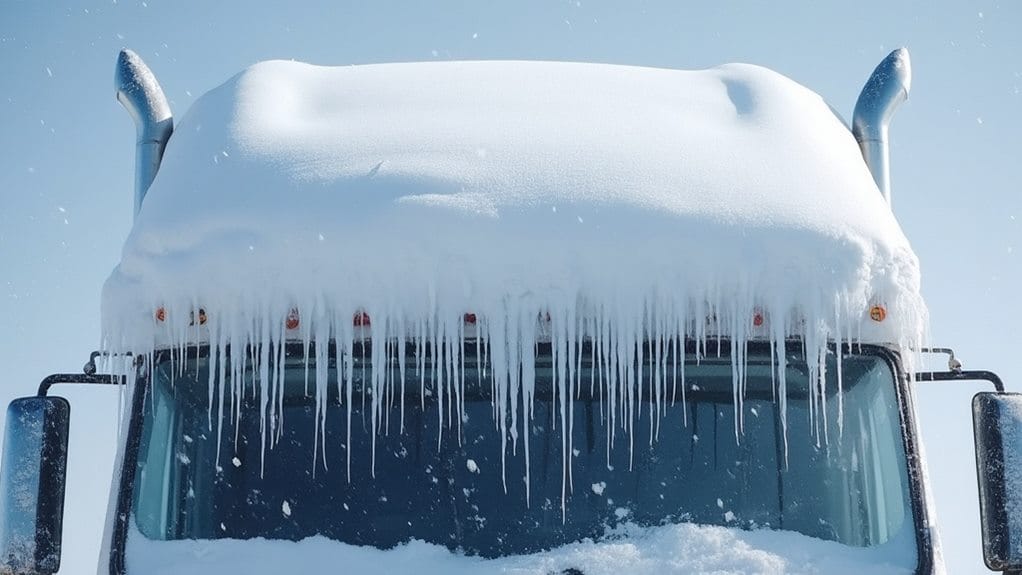
Roof snow is easy to ignore until it comes off on the road. For a fleet manager there are three kinds of risk: the ticket, the injury case, and the safety of the people who clear the roofs.
The ticket
Several states now have rules about clearing snow and ice off a vehicle before you drive. The base fines are often small. Pennsylvania, for example, fines $50 even if nothing falls.
When someone is hurt
In Pennsylvania, drivers must make reasonable efforts to clear snow and ice from the hood, trunk and roof within 24 hours after it stops falling. The fine is $50, and it rises to $200 to $1,500 if snow or ice flies off and causes death or serious injury. In Connecticut, a commercial vehicle faces a fine of $500 to $1,250 if snow or ice causes injury or damage. In New Jersey the owner or lessee can be held responsible as well as the driver. A crash can also bring claims on top of any fine.
The risk to your own people
Clearing a trailer roof by hand usually means a ladder, a rake or a lift. That puts a person on top of the vehicle in winter, which is a fall risk. Ask whether every roof really has to be cleared that way.
What you can do
- Learn the rule in each state where your drivers run. Start with our page on state snow and ice laws.
- Clear roofs before dispatch after every storm.
- Keep a simple record of when each vehicle was cleared.
- Choose a method that keeps people off the roof.
Talk to us
Call 866-393-9300 or send a message to ask about a fixed system or a mobile unit for your fleet.
The rules differ by state. Read is it illegal to drive with snow on your truck roof for a short summary.