

Informational, not legal advice. Laws change. Check the official page for each state before you rely on it. Last checked October 19, 2026.
Many states and provinces now expect you to clear snow and ice off a vehicle before you drive. Some have a snow-specific law. Others use a general rule about unsafe driving or falling loads. Below are the states we could confirm from official sources. Fleet Blast makes a system for clearing snow and ice off truck, trailer and bus roofs.
Why this matters to your fleet
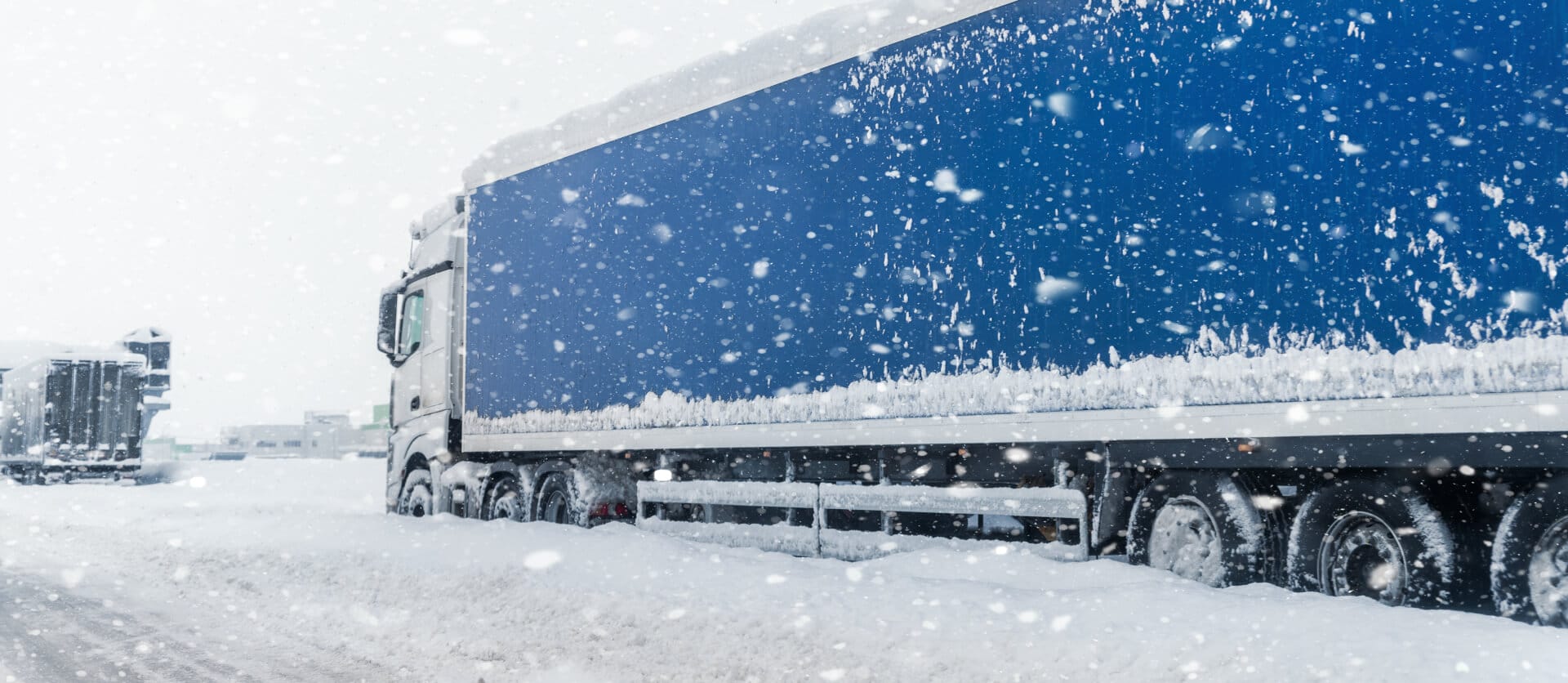
Snow and ice left on a roof does not stay there. It comes off at highway speed, in front of other drivers. States have noticed, and the rules are getting stricter. Maryland’s law took effect on October 1, 2026.
- The fine can be small. The injury case is not. In Pennsylvania the base fine is $50, but it is $200 to $1,500 if falling snow or ice causes death or serious injury. In Connecticut a commercial vehicle faces $500 to $1,250 if snow or ice causes injury or damage.
- A commercial vehicle is treated more strictly. Connecticut, New Jersey and Maryland set higher fines for commercial vehicles than for cars.
- The driver gets the ticket, and the company has to answer for it. New Jersey can hold the owner or lessee responsible as well as the driver, and a crash can bring claims on top of any fine.
- You cannot clear a trailer roof from the ground. A hand rake, a ladder or a lift costs time, and it puts a person on top of the vehicle. Clearing roofs with air as the truck drives past is what Fleet Blast is for.
Connecticut
Drivers of cars and commercial vehicles must clear snow and ice from the hood, trunk and roof so it does not threaten people or property. The fine is $75. If snow or ice flies off and hurts someone or damages property, the fine is $200 to $1,000 for a regular vehicle and $500 to $1,250 for a commercial vehicle. The rule does not apply if a storm started and kept going while you were driving, or if the vehicle is parked.
Source: Conn. Gen. Stat. 14-252a
Read more: Connecticut Truck Roof Snow and Ice Law Explained
Delaware
Delaware’s law took effect on September 24, 2026. Drivers must remove accumulated ice and snow from the vehicle’s exterior surfaces before driving. The fine is $25 to $75, and $500 to $1,500 for a commercial vehicle if snow or ice falls and causes damage or injury. Roads with a speed limit of 25 mph or less are exempt.
Source: 21 Del. C. 4186A (Senate Bill 233, 85 Del. Laws c. 527)
Read more: Delaware Snow and Ice on Vehicles: What the Law Says
Maine
Maine treats snow and ice as a load that must be secured so it does not fall off. The fine is $150 to $500.
Source: 29-A MRS 2396
Read more: Maine Snow and Ice on Vehicles: What the Law Says
Maryland
Starting October 1, 2026, drivers must make reasonable efforts to clear snow and ice from the hood, trunk, windshield, windows, roof, truck cab and trailer tops before driving or towing. Fines are higher for commercial vehicles and go up with repeat offenses, and are higher if uncleared snow or ice contributes to a crash. Amounts vary, so see the statute. Police can enforce the basic rule only when they have stopped a driver for something else.
Source: HB 474, Chapter 668 of 2026
Read more: Maryland Clear Before You Drive Act: Truck Roof Snow
Massachusetts
Massachusetts has no snow-specific rule that we could find. A general law says a vehicle must be loaded so its load does not drop onto the road. The fine is $50 to $200.
Source: G.L. c.85 s.36
New Hampshire
New Hampshire has no snow-specific rule in its negligent driving law, but the law covers driving in a way that endangers people or property. The fine is $250 to $500 for a first offense and $500 to $1,000 after that.
Source: RSA 265:79-b
New Jersey
Drivers must make all reasonable efforts to clear snow and ice from the hood, trunk, windshield, windows and roof before driving. For trucks, this includes the cab and the top of trailers and containers. There is a fine even if nothing falls off, and higher fines if snow or ice falls and causes injury or damage, with higher amounts for commercial vehicles. Amounts vary, so see the statute. A commercial driver who is on the way to a place with snow removal equipment, and has not already passed one, is not fined for the basic rule.
Source: N.J.S.A. 39:4-77.1, as amended in 2009
Read more: New Jersey Truck Roof Snow and Ice Law Explained
Pennsylvania
Under Christine’s Law, drivers must make reasonable efforts to clear snow and ice from the hood, trunk and roof within 24 hours after snow stops falling. The fine is $50 even if nothing falls. If snow or ice flies off and causes death or serious bodily injury, the fine is $200 to $1,500. Truck and bus drivers who are on their way to a place to remove it are not covered by the basic rule.
Source: 75 Pa.C.S. 3721
Read more: Pennsylvania Truck Roof Snow Law (Christine’s Law)
Quebec
Quebec’s Highway Safety Code bans driving a vehicle covered with snow, ice or other matter that could come loose and endanger other road users. It applies to any vehicle. The fine is $60 to $100 (Canadian dollars), plus costs.
Source: Highway Safety Code, art. 498.1 and art. 507
Rhode Island
Drivers may not drive with a significant amount of snow or ice on the vehicle, meaning an amount that could blow off and block another driver’s view. Snow that piles up naturally while you drive in bad weather is not a violation. Fines are set in the state fine schedule, so see the statute.
Source: RIGL 31-23-16
Wisconsin
Wisconsin has no snow-specific rule that we could find. A general law says a vehicle must be built and loaded so its contents do not drop or escape.
Source: s. 348.10(2)
Other states and provinces
We also read the vehicle codes of more than 30 other states and Canadian provinces. Most have general rules about loads falling off vehicles or about blocked windows, but we did not find a statute that names snow on the roof. Alaska exempts snow and ice that builds up naturally on a vehicle. If a state is not listed above, we have not confirmed what its law requires. Contact the state police or DOT where you operate.
For a quick summary by state, read is it illegal to drive with snow on your truck roof.