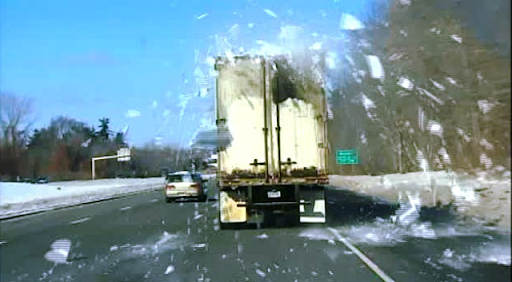
Snow left on a roof does not stay there. It slides, lifts and breaks off as the vehicle picks up speed, and it can land on the cars behind.
Why it is a road safety problem
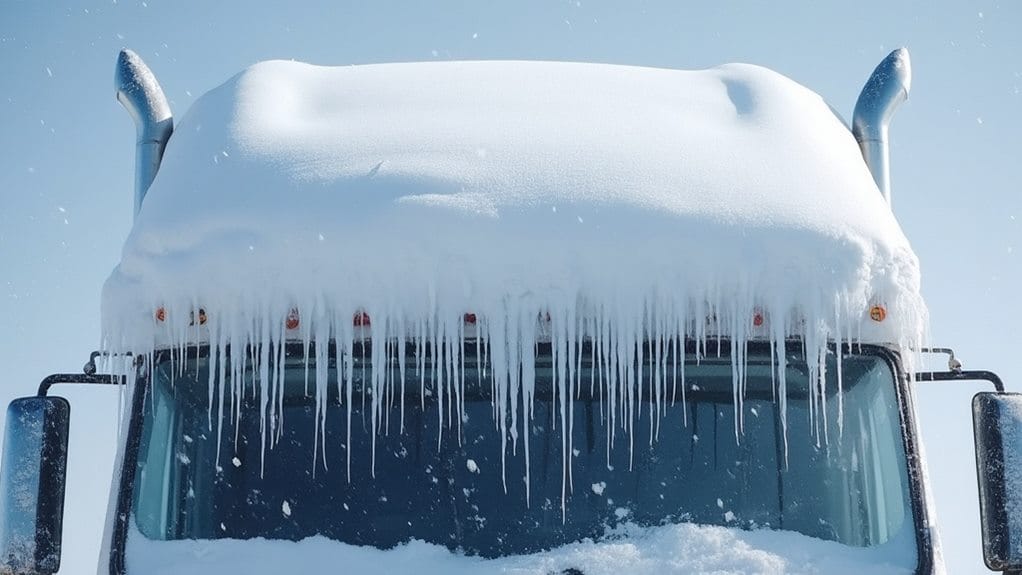
A chunk of snow or ice can hit a windshield or block a driver view. A truck or trailer roof is high and wide, so a lot can sit up there after a storm. The driver often cannot see it from the cab.
States have started to act
In Pennsylvania, drivers must make reasonable efforts to clear snow and ice from the hood, trunk and roof within 24 hours after it stops falling. The fine is $50, and it rises to $200 to $1,500 if snow or ice flies off and causes death or serious injury. In Connecticut, a commercial vehicle faces a fine of $500 to $1,250 if snow or ice causes injury or damage.
Maryland has a law that took effect on October 1, 2026. Delaware signed a new law on September 24, 2026. Quebec bans driving with snow or ice that could come loose and endanger others, with a fine of $60 to $100. See our page on the state snow and ice laws for the rules and the official sources.
What fleets can do
- Check every roof before the vehicle leaves the yard after a storm.
- Know the rule in each state where you run.
- Use a method that does not put a person on top of the vehicle.
- Look at an air system such as Fleet Blast, which clears the roof as the vehicle drives past.
Talk to us
Call 866-393-9300 or send a message to ask about a fixed system or a mobile unit for your fleet.