

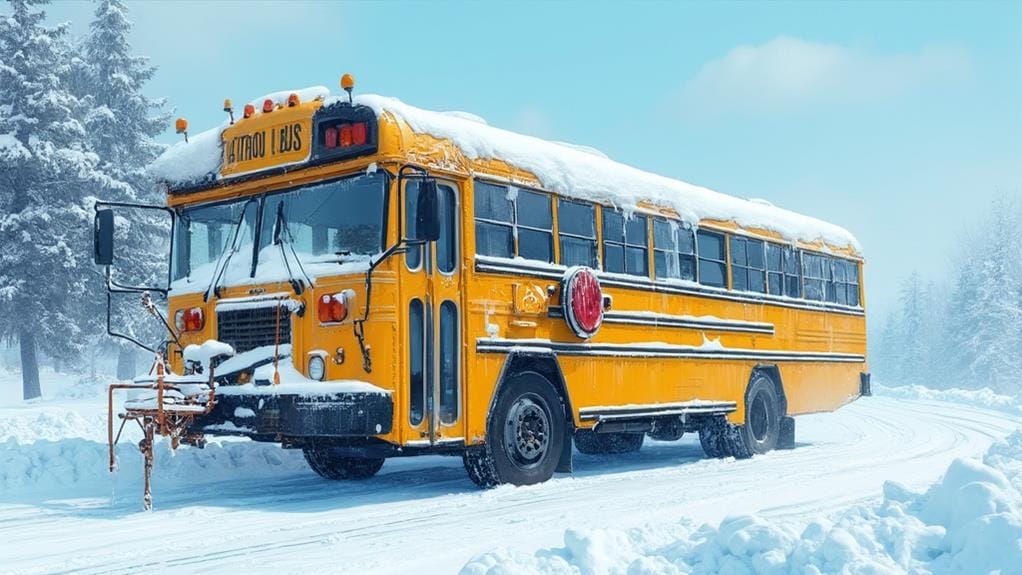
To guarantee safe and efficient school bus snow removal, start by monitoring weather forecasts and preparing your equipment before winter hits. Clear bus routes early in the morning using high-capacity snow removal equipment. Train drivers on winter-specific techniques and establish clear communication channels. Employ automated snow removal systems and air-based methods to prevent damage to buses. Implement a snow storage plan to avoid obstructions along cleared routes. After storms, promptly clear snow from bus roofs and conduct regular equipment inspections. By following these tips, you’ll enhance student safety and maintain timely transportation. Uncover more strategies to optimize your winter operations and keep students safe.
Key Takeaways
- Implement automated snow removal systems for enhanced safety and efficiency during bus clearing operations.
- Clear bus routes early in the morning using high-capacity equipment.
- Train drivers on winter-specific techniques, weather monitoring, and hazard reporting protocols.
- Utilize height-adjustable scrapers and air-based removal methods to prevent damage to different bus types.
- Establish a comprehensive snow storage plan to prevent obstructions along cleared routes.
Pre-Storm Preparation
In advance of winter’s icy grip, thorough pre-storm preparation is vital for school bus safety.
You’ll need to closely monitor weather forecasts to anticipate snow events and plan routes accordingly.
Utilizing advanced solutions like the Fleet Blast Snow Removal System can streamline snow removal operations, enhancing the safety and efficiency of your fleet.
Before the winter season begins, service all snow removal equipment, including scrapers and blowers. Distribute these tools to school facilities in advance, assuring that staff are prepared to address accumulations promptly.
This preparation extends to the school bus roof snow removal process, which is essential for safety and compliance.
Establish a detailed snow storage plan, designating appropriate areas for snow piles.
Conduct training sessions for staff on snow removal procedures and safety protocols, emphasizing the importance of clearing school bus roofs.
Clearing Bus Routes
Numerous school districts face the challenge of clearing bus routes efficiently during winter storms. To guarantee safe and timely transportation for students, you should prioritize clearing these routes early in the morning before scheduled arrival times.
Additionally, consider incorporating Fleet Blast Snow Removal System to enhance efficiency and safety during snow removal operations.
To optimize your snow removal systems and maintain safe bus routes throughout the day:
- Regularly monitor weather conditions to adjust your clearing strategies
- Establish a plan for snow storage along cleared routes to prevent obstructions
- Maintain open communication with school staff and transportation departments
Implement a thorough strategy for clearing snow from bus routes that includes frequent monitoring and updates.
Clearing Bus Routes for Optimal Visibility
To maintain ideal visibility for bus drivers, it’s essential to prioritize the clearing of snow and ice from bus routes. This not only prevents accidents but also enhances the overall efficiency of transportation services, allowing buses to operate on schedule.
Maintaining clear bus routes also helps prevent dangerous ice formation, particularly around bus loading and unloading areas. This reduces the risk of slips and falls for students, assuring their safety while waiting for the bus.
Additionally, collaboration with local municipalities for timely snow clearance on bus routes demonstrates a commitment to community engagement and compliance with safety regulations.
Vehicle Snow Removal Techniques
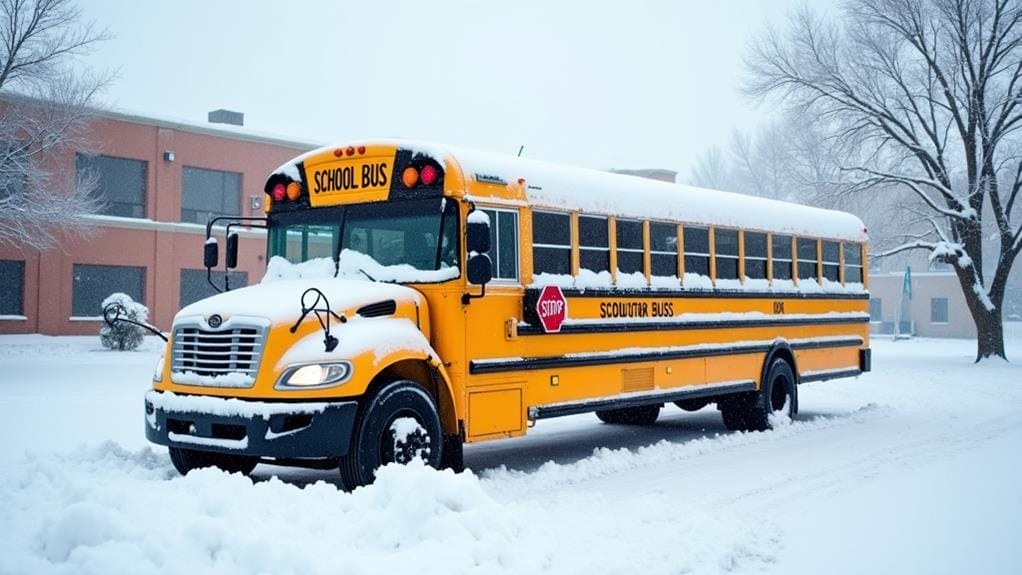
During winter storms, efficient vehicle snow removal techniques are vital for maintaining a safe and operational school bus fleet. You should consider implementing automated snow removal systems that allow drivers to remain seated, enhancing safety and efficiency in harsh conditions.
Consider innovative air-based methods, using blowers to dislodge snow while minimizing the risk of physical damage to bus surfaces.
| Technique | Benefit |
|---|---|
| Automated systems | Driver safety |
| Heavy-duty scrapers | Rapid clearing |
| Height-adjustable equipment | Versatility |
| Air-based removal | Damage prevention |
Regular monitoring and maintenance of your snow removal equipment is vital. By implementing these advanced snow scraper systems and techniques, you’ll maintain a safe, efficient school bus fleet throughout the winter season.
Equipment and Tools
Essential equipment and tools form the backbone of efficient school bus snow removal operations.
Utilizing an advanced air-based system for snow removal enhances safety and protects vehicles from damage during winter operations.
Innovative air-based methods using blowers are also effective for dislodging snow from bus roofs, minimizing the risk of damage to the vehicle and rooftop equipment.
Consider investing in automated snow removal systems that allow drivers to clear snow while remaining seated, prioritizing timely student transportation and reducing manual labor. These systems are particularly beneficial for large fleets.
Key equipment for school bus snow removal includes:
Ensuring Safe Bus Loading and Unloading
How can you guarantee the safety of students as they board and exit the bus during winter conditions? Securing clear and accessible bus loading and unloading zones is vital. The table below outlines essential considerations for maintaining these areas:
| Area | Importance | Action |
|---|---|---|
| Snow Removal | Prevents slips and falls | Promptly clear snow and ice |
| Visibility | Enhances driver awareness | Confirm mirrors and lights are unobstructed |
| Designated Zones | Designate safe areas | Create and communicate loading/unloading zones |
| Communication | Coordinate with supervisors | Regularly update on conditions |
| Compliance | Adhere to regulations | Follow laws regarding snow removal |
Driver Training and Communication
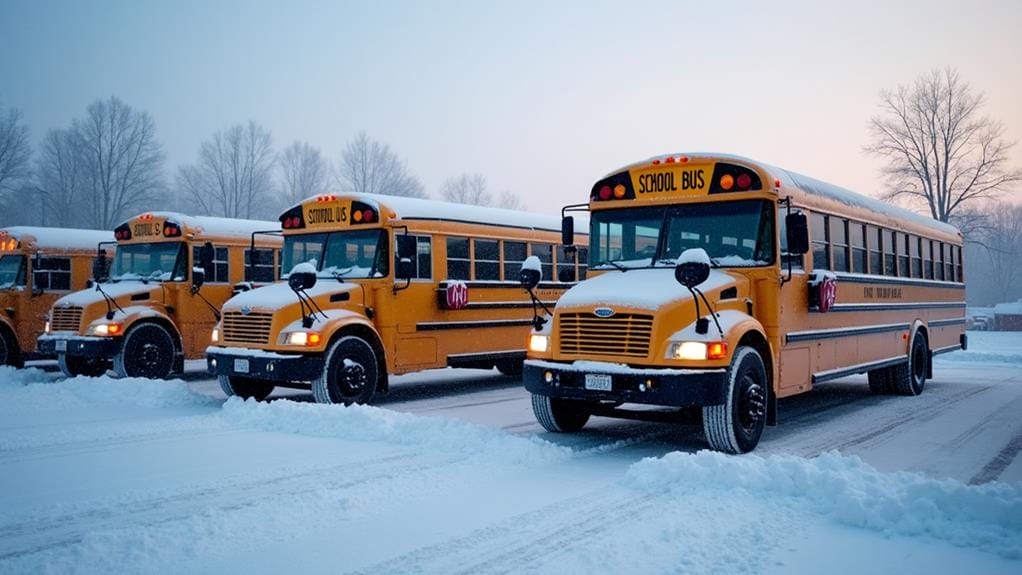
While having the right equipment is vital, properly trained drivers are the cornerstone of safe winter operations. Extensive driver training programs should emphasize protocols for monitoring weather conditions and adjusting routes accordingly.
Teach your drivers winter-specific techniques, such as maintaining traction and adapting speed to road conditions, to enhance safety during inclement weather.
Stress the importance of thorough pre-trip inspections, particularly checking for ice and snow accumulation on bus roofs. This significant step prevents potential accidents caused by falling snow and ice.
Establish clear communication channels between drivers and maintenance staff to promptly address snow removal needs and guarantee buses are ready for safe operation after winter weather events.
Regular communication is key to maintaining a safe fleet during snowy months. Encourage drivers to report hazardous conditions immediately, facilitating quick action and improving overall safety for both drivers and students.
Post-Storm Maintenance
After a snowstorm passes, your work isn’t over. Post-storm maintenance is vital for guaranteeing the continued safety and efficiency of your school bus fleet. Start by promptly clearing snow from all bus roofs to prevent hazardous sliding during transit.
Implement a daily log to track your snow and ice removal efforts, helping you evaluate effectiveness and identify areas for improvement.
Regular equipment inspection and maintenance are necessary, especially during harsh winter conditions.
Designate staff members to monitor entrances throughout the day, reducing slip and fall risks for students and staff.
To maintain a coordinated response to changing weather conditions, establish clear communication protocols for your team. This allows staff to report ongoing snow and ice management efforts effectively.
Key post-storm maintenance tasks include:
- Thoroughly inspecting buses for snow and ice accumulation
- Checking and clearing all windows, mirrors, and lights
- Guaranteeing proper functioning of heating and defrosting systems
Conclusion
You’ve now got the tools to conquer winter’s icy grip on your bus fleet. Like a well-oiled machine, your snow removal process will hum with efficiency. Remember, safety is your North Star, guiding every decision. With these strategies in your arsenal, you’ll slice through snow like a hot knife through butter, keeping your buses rolling and your students safe. Winter may howl, but you’re ready to answer its challenge.
